

/ Genesis and assumptions.
A multi-level platform and application for managing ski station information
SkiOS was created to help ski stations collect and manage up-to-date information about their infrastructure and share it through different channels, including websites, media, advertising screens and third-party services.
The product included:
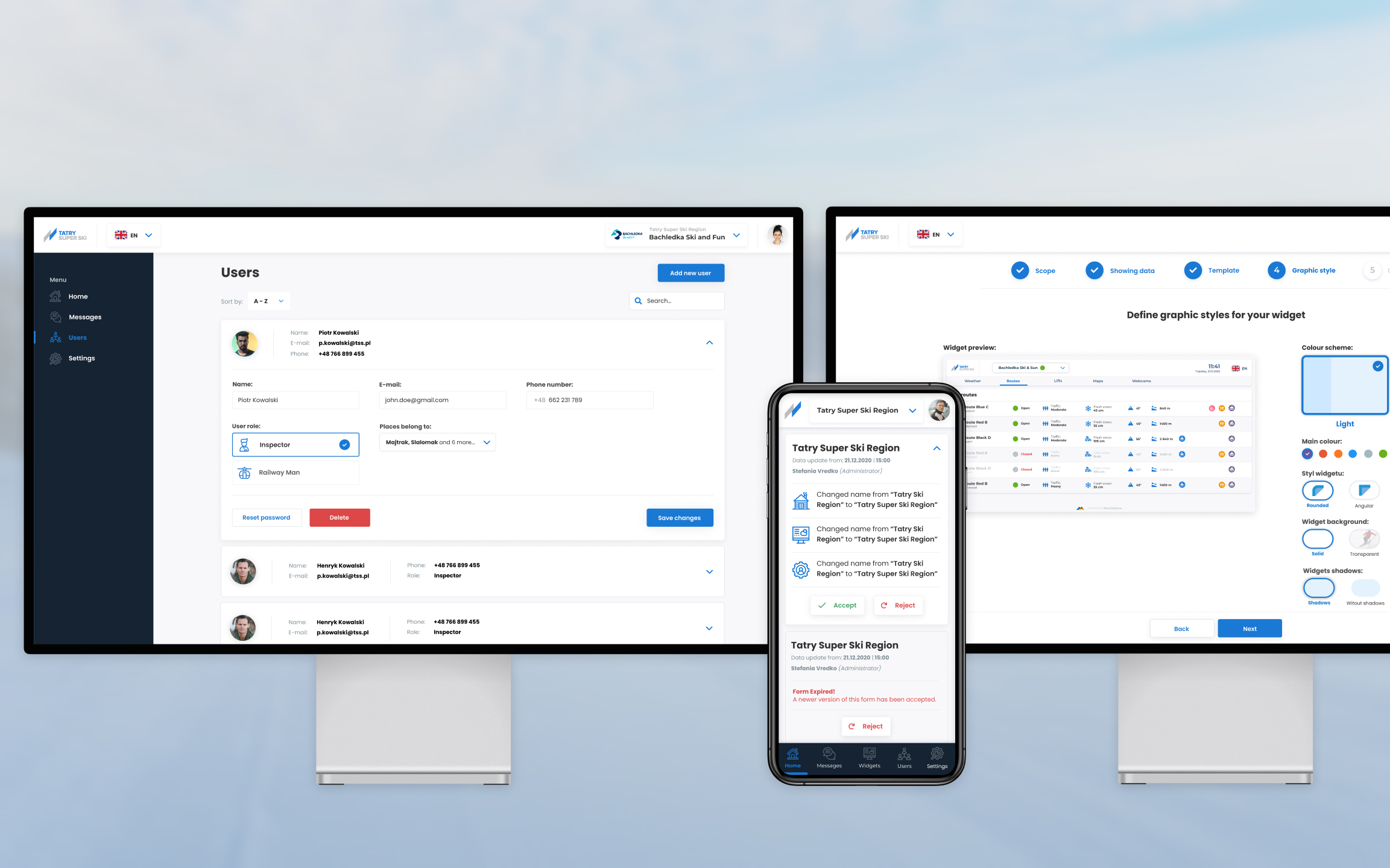
- A platform for managing ski station infrastructure, including ski lifts, routes, weather stations, machines, gates, employees and service technicians.
- A mobile application for employees to update infrastructure data and respond to incidents.
- A content management and moderation mechanism for regional information.
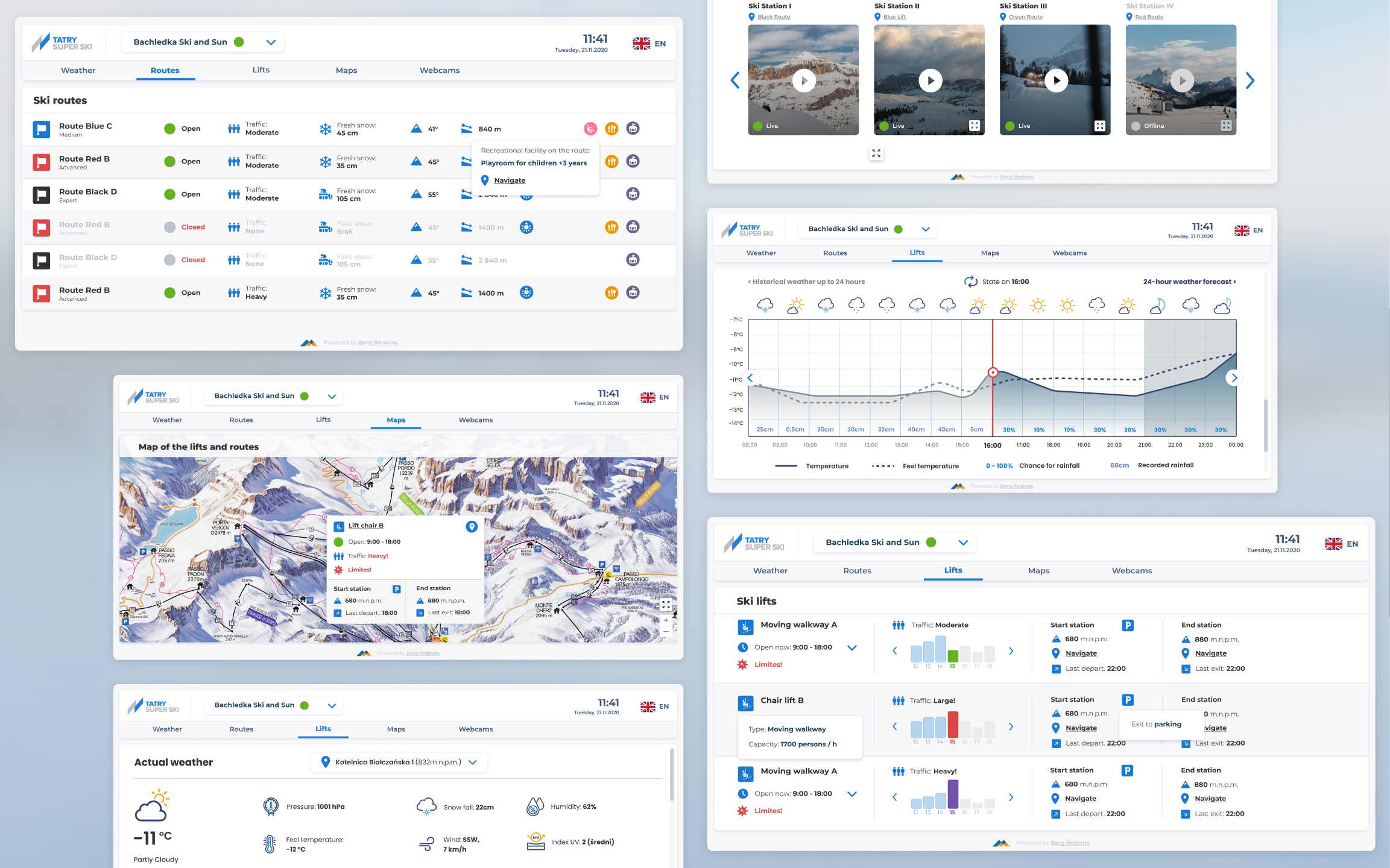
- A widget builder for creating configurable information widgets for different devices.
- Marketing and information tools for campaigns, messages and safety alerts.
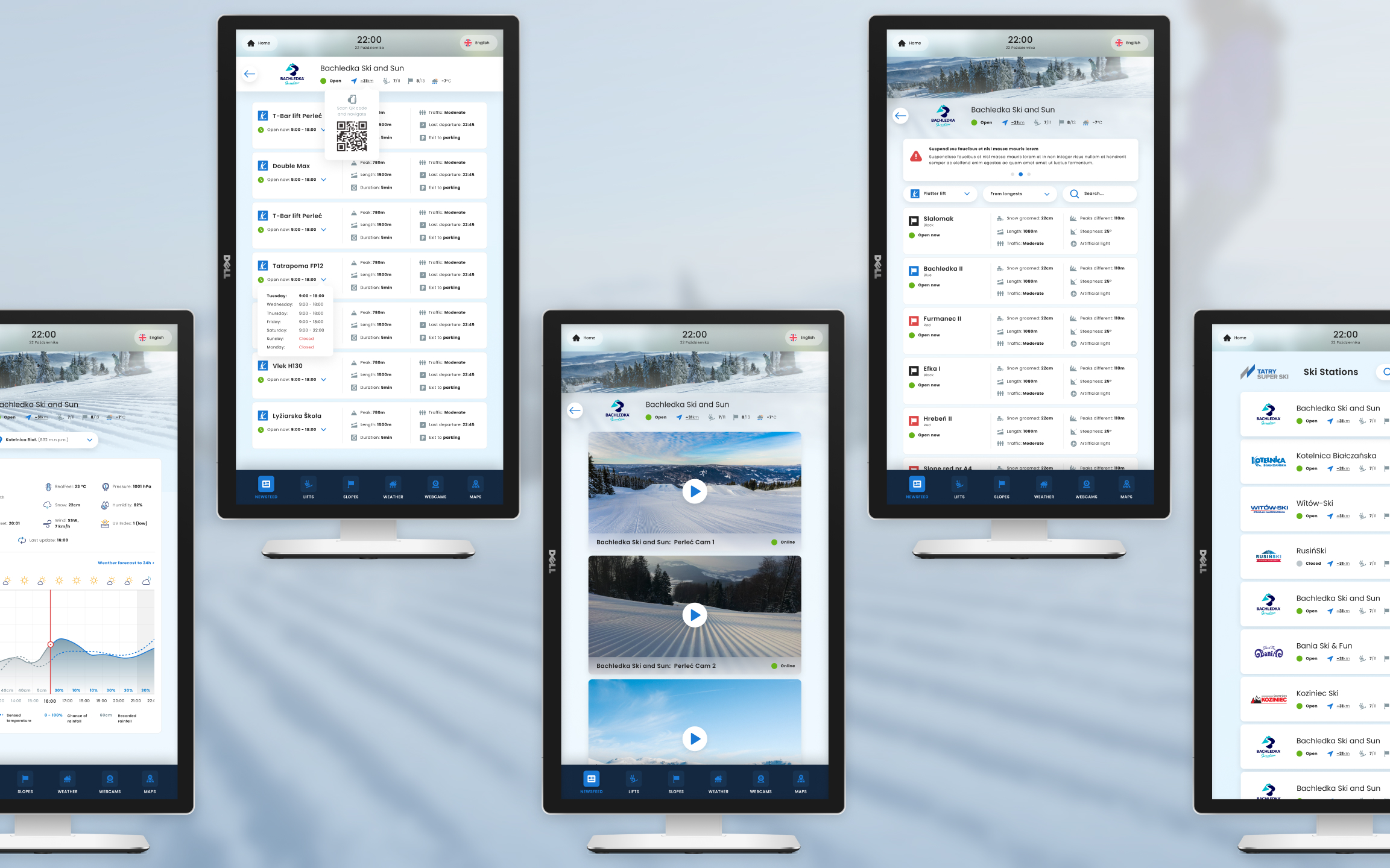
- On-site information and advertising applications, including interactive kiosks and passive screens.
/ Business Impact
The product was eventually deployed across all ski stations in the Podhale region, generating approximately PLN 2 million in profit.
Around 140 people used the mobile application daily to monitor weather conditions, while around 50 people used the web platform each day.
The availability of information and tourist offers at ski station locations increased by approximately 60%.
The product was later standardised for the Italian market, including the design of specific functionality required by local ski stations, and prepared for implementation in the Italian Alps.
The further development of the product outside Poland is unknown, but the product brand is still present on the market.
/ SKIOS SYSTEM
The process of designing a product
/ Think — Discovery
The project started with meetings with representatives of Tatry Super Ski (TSS), a group connecting ski resorts and tourist destinations in the Tatra region.
To better understand the idea and identify user and business needs, we organized design workshops with TSS representatives, selected ski resorts and tourist destinations. Together, we defined business and product goals, key problems and target user groups.
We used Business Model Canvas and Value Proposition Canvas to organize the knowledge and define user needs, expectations and concerns. We also agreed on what the product should and should not be.
The main problem identified during the workshops was the need to provide tourists with current information about ski resorts and tourist destinations throughout the year. Another challenge was finding an effective way for resorts to collect, process and share this information.
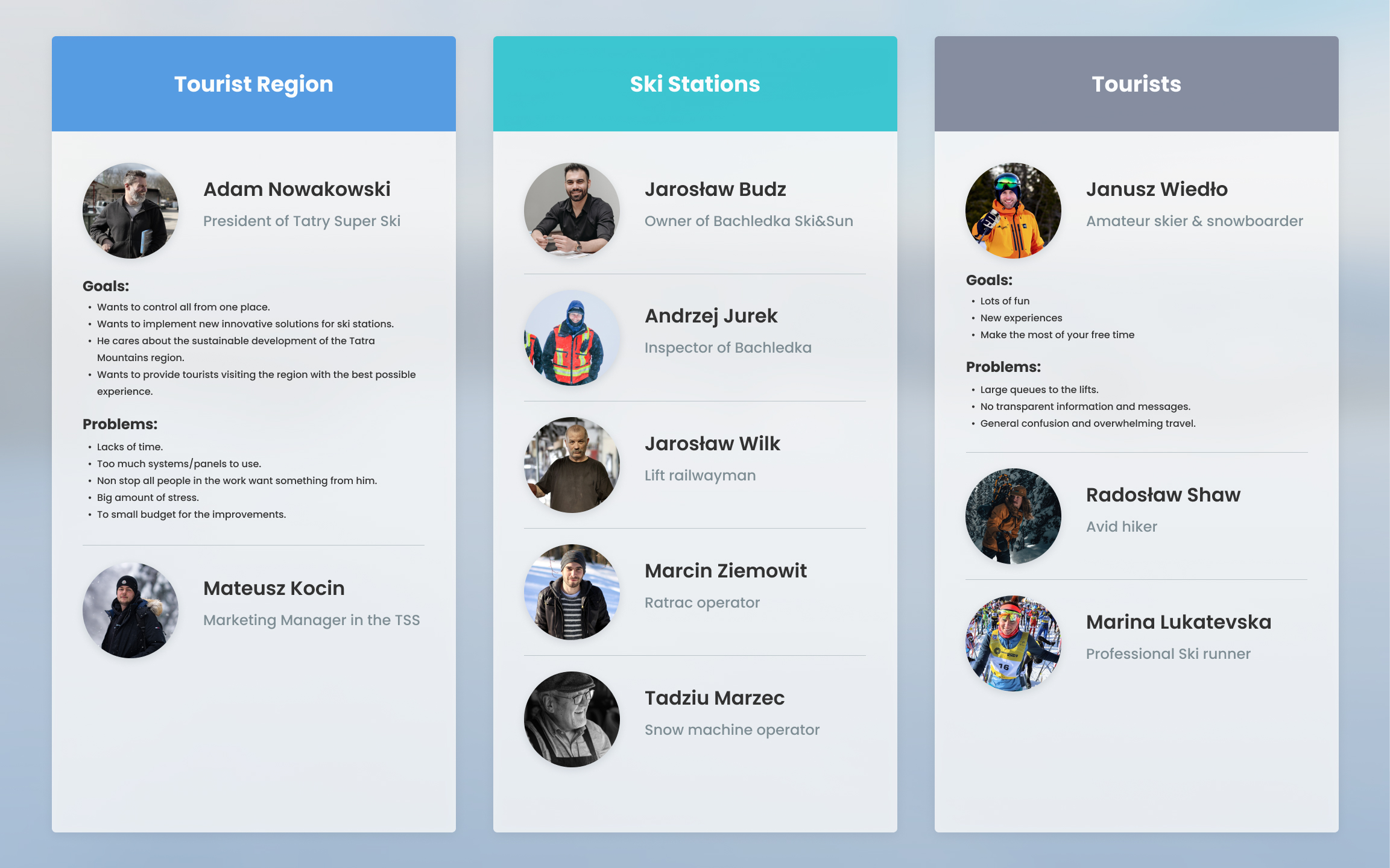
We defined user groups based on their roles in the system. These included ski resort employees, such as machine operators and inspectors, resort managers and tourists. We used personas to organize the problems and needs of each group.
/ Discovery — Research.
To verify the assumptions from the workshops, I designed two qualitative research activities: in-depth interviews and field studies.
We conducted around five interviews for each main user segment: ski resort employees, managers and tourists. Each group had a separate interview script adapted to its role. Recruiting participants was one of the main challenges, and the client’s contacts with selected resorts helped us reach them.
The interviews helped validate our assumptions and provided a better understanding of the daily work, problems and needs of different users.
I also led field research in selected ski resorts. I observed employees during their daily work, from machine operators to managers. Before each study, I prepared a scenario with general questions and topics to explore.
Being present during their daily activities gave me a better understanding of their real working conditions and helped identify problems that the product could solve. It also provided additional insights into the difficulties faced by tourists.
After the research, I analyzed the collected data and organized the findings and insights in Miro. Together with the business team, we updated the Business Model Canvas, Value Proposition Canvas and user segments.
We also analyzed direct and indirect competitors, including solutions outside the ski industry. This helped us identify useful functionality, solutions to avoid and potential gaps in the market.
/ Think — Ideation
Based on the research and workshops, I worked with the business and technical team to define functionality addressing the identified problems.
We used brainstorming sessions and an Opportunity Solution Tree to create a functionality map. At this stage, the concept of three main product components emerged:
- A platform for managing information at ski resorts.
- A widget builder providing tourist information across different devices.
- A mobile application for collecting information from tourist destinations.
We created User Stories for key functionalities and, together with the business analyst, prepared a detailed list of required features and user roles.
Because of budget limitations, functionality had to be prioritized. We used a Priority Matrix to identify the most important features and define a consistent MVP. Less important features were postponed to later stages.
/ Think — User flows and wireframes
I prepared user flows and flow maps for the most important mobile app and platform functionalities.
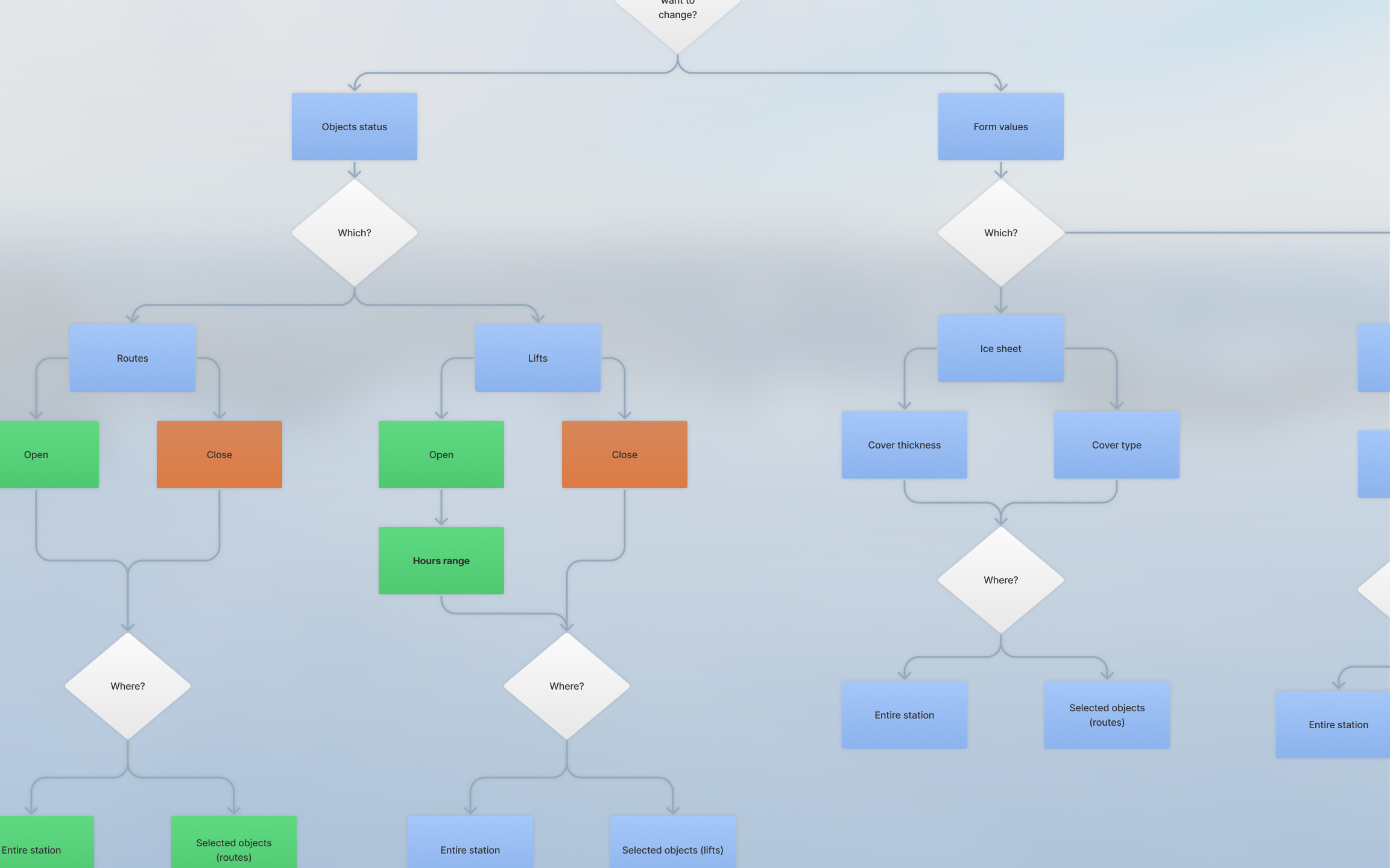
The mobile app was relatively simple, while the platform was much more complex because of the large number of features and dependencies between objects. Some objects were connected through settings, and changes in one object could affect the status of another.
I mapped these relationships in Miro and FigJam. Documenting the platform structure took around two weeks of intensive work.
After defining the flows, I created low-fidelity wireframes. I started with the key functionalities and focused first on the general structure before moving to detailed views.
Working from previously prepared flows helped ensure that the main scenarios were covered and reduced the risk of mistakes before moving to the final interface.
/ Make — UI and implementation
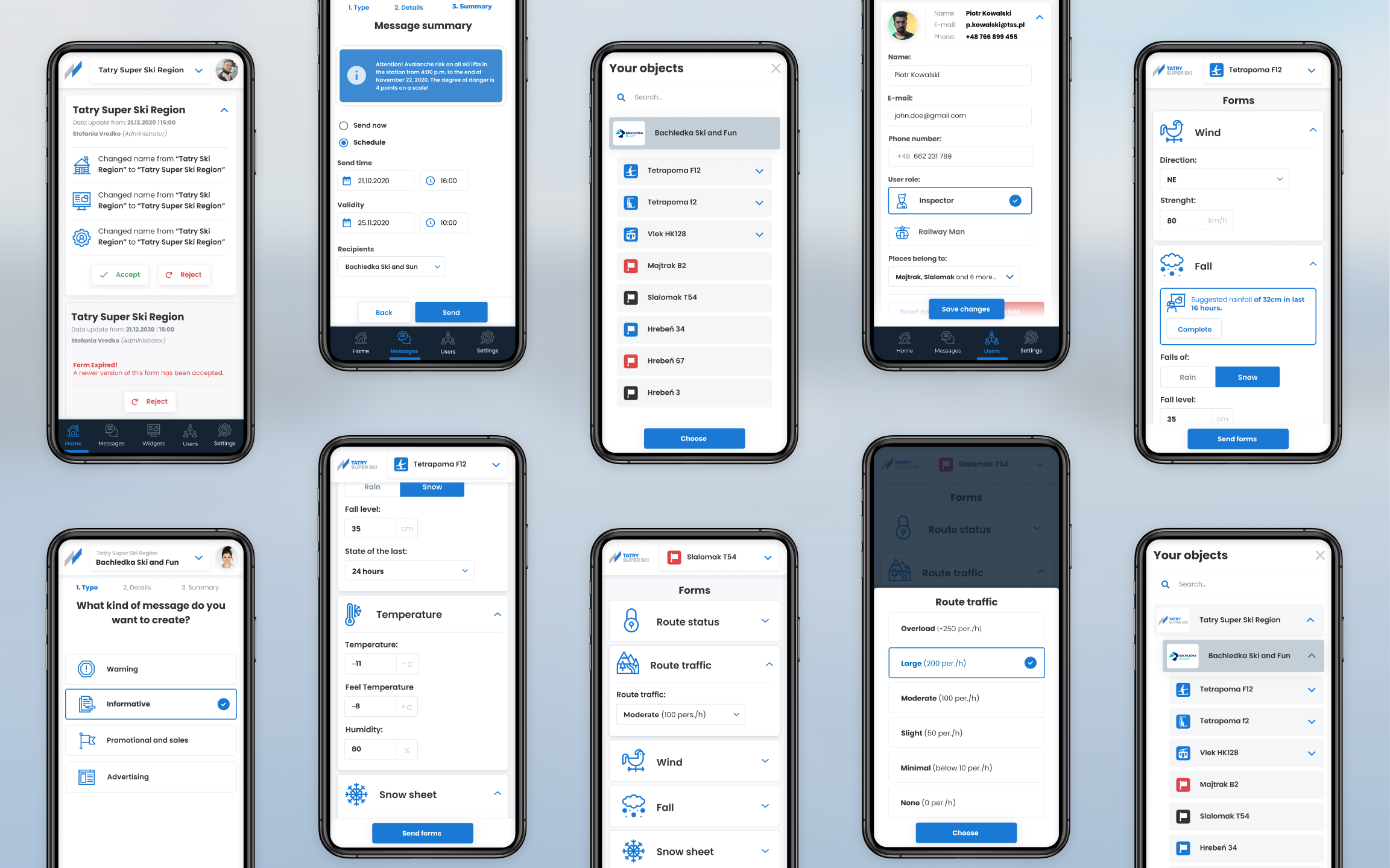
For the final interface, I first reviewed existing component libraries and public design systems to identify useful UI patterns. Material Design components were particularly useful when designing the mobile application.
I also researched current web and mobile design trends using Dribbble, Behance and Awwwards. Based on this research and the client’s branding, I prepared a basic Style Guide that became the foundation for the Design System in Figma.
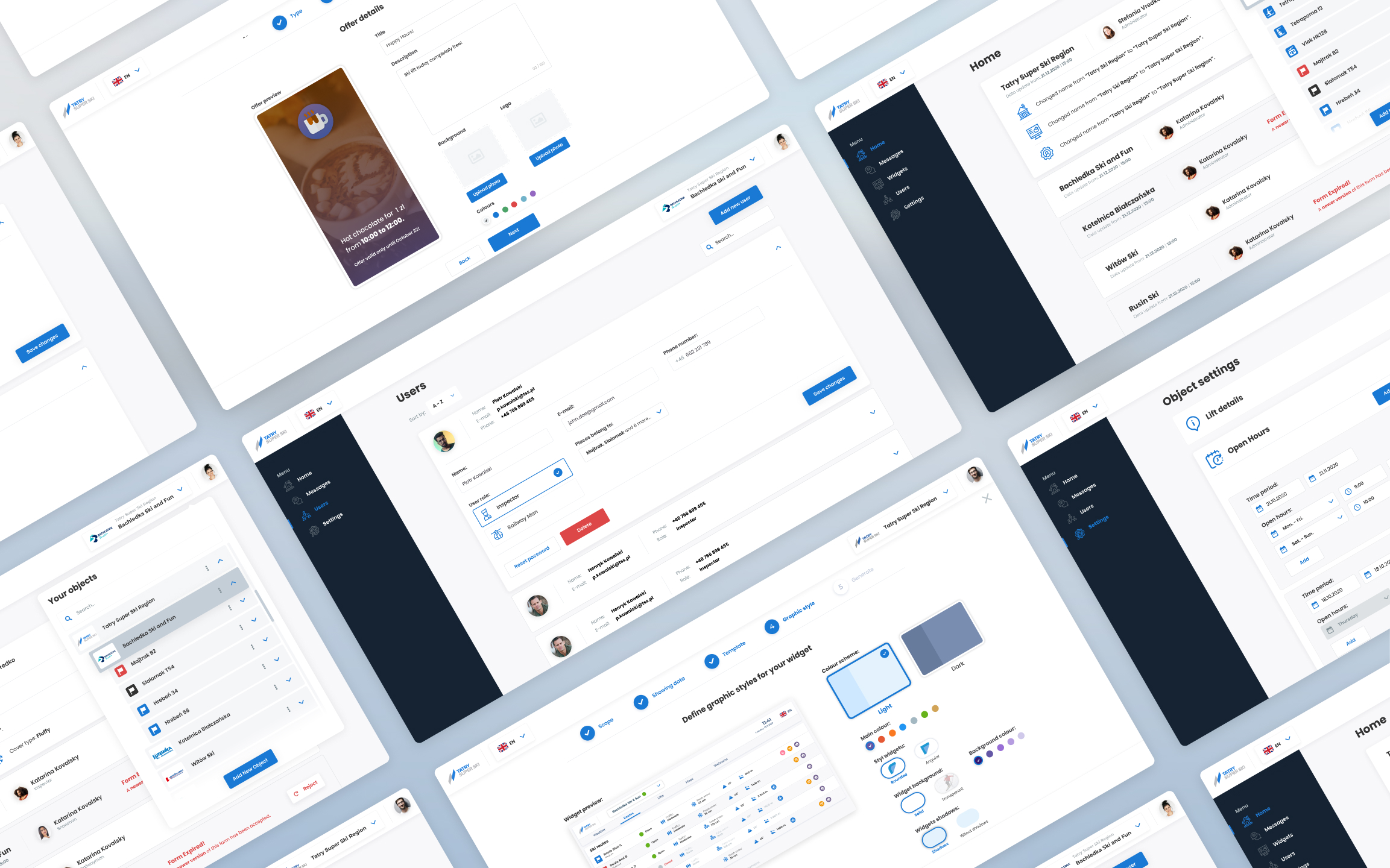
I designed the interface from general to specific, starting with key functionalities. New UI components created during the project became part of our local Design System and were documented directly in Figma for future reuse.
The component library was developed together with the development team. Developers were simultaneously building their front-end library to support future product development.
High-fidelity designs were created according to the implementation roadmap and delivered to developers in consecutive sprints. I worked closely with developers during implementation, explaining interactions, transitions, animations, responsiveness and other interface behaviours.
/ Learn — Delivery
After the MVP platform and mobile application were deployed, we started internal testing. I actively participated in these tests and helped identify bugs and issues before the first users received the product.
The platform was then launched for selected clients with basic information management and widget generation functionality. To support onboarding, I prepared PDF instructions and video recordings explaining key functions.
After several weeks, we started receiving client feedback, including bug reports and performance issues. A ticketing system was introduced to organize these reports, assign responsibility and forward issues to the development team.
Because of budget constraints, we could not conduct full usability testing of the web platform and widget builder. We did, however, conduct usability testing of the mobile application used to collect ski resort information. The tests revealed several significant usability problems, which were addressed in later iterations.
/ Learn — Main problems
One of the main challenges was pressure from the business side to implement features that did not address real user needs. This resulted in resources being spent on solutions that did not provide value to end users.
The lack of full usability testing also meant that some important problems in the web platform and widget builder were discovered late, during internal testing or conversations with clients. One example was the inability to operate the widget using only a keyboard.
External integrations created another challenge. Some data providers changed their systems without prior notice, which caused interruptions or temporary unavailability of some features.
The implementation process was also affected by organizational problems. The lack of dedicated project management created situations where users received underdeveloped features and the development team sometimes focused on secondary bugs instead of key issues.
Research also did not reveal every user-side limitation. For example, some ski resort employees did not have suitable devices for using the mobile application, which made deployment more difficult in some locations.
/ Learn — Summary
SkiOS showed me how complex designing and implementing a digital system can be, especially in an industry with strong seasonality and specific operational conditions.
The project reinforced the importance of continuously validating assumptions and planning usability testing early. It also showed me how important communication with business and technical teams is when balancing user needs, business expectations, budget and technical limitations.
I also learned the value of detailed documentation and onboarding materials. The prepared instructions and videos helped clients understand the system and reduced the need for support.
Finally, the project strengthened my ability to work within an interdisciplinary team, make design decisions under time pressure and adapt the UX process to real project constraints.